

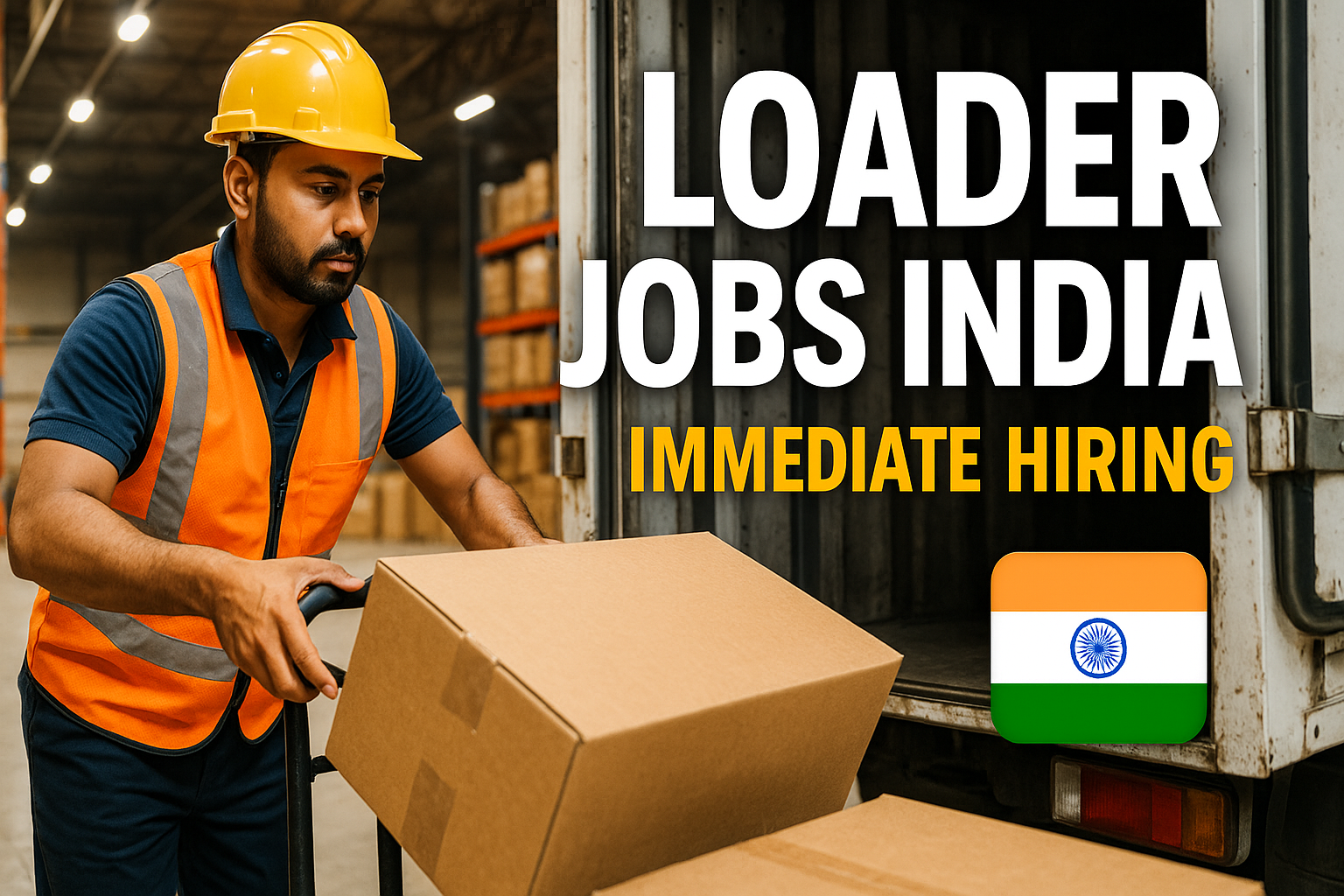
Overview: Loader and unloader jobs are the backbone of warehouses, factories, construction sites, ports, logistics hubs and retail distribution centres. These roles involve handling goods — loading them onto trucks, unloading inbound shipments, stacking pallets, and preparing consignments for dispatch. With the boom in e-commerce, warehousing and supply-chain operations across India, demand for reliable loader/unloader staff has grown steadily. These jobs are ideal for freshers, semi-skilled workers and those seeking quick entry into steady employment with overtime and shift benefits.
Who hires Loaders & Unloaders?
Loaders and unloaders are employed by a wide range of employers, including:
- E-commerce warehouses and fulfillment centres (Amazon, Flipkart warehouses, 3PLs)
- Manufacturing plants (FMCG, electronics, apparel)
- Retail distribution hubs and supermarkets
- Construction companies and contractors
- Ports, cold storage facilities and logistics yards
- Local wholesalers and packaging units
Typical Duties & Daily Tasks
While duties vary slightly by sector, core tasks usually include:
- Loading goods onto trucks, containers and autos
- Unloading inbound consignments and checking quantity
- Stacking and arranging pallets in the warehouse
- Operating hand trucks, trolleys and pallet jacks (basic)
- Scanning packages or assisting pickers in scanning process
- Wrapping and securing pallets for transport
- Basic quality checks for visible damage and reporting issues
- Keeping the loading/unloading bay clean and safe
- Working with the dispatch team to ensure accurate paperwork
In many modern warehouses, loaders also work alongside semi-automated conveyor lines and wear handheld scanners. In construction or port work the job can be more manual and outdoor-based.
Shift Patterns & Working Hours
Loaders/unloaders typically work in shift patterns that match the 24/7 nature of logistics:
- Day shifts (8–10 hours)
- Night shifts — common in warehouses to support 24-hour operations
- Split shifts or peak-hour shifts (morning or evening)
- Overtime during sale seasons, festival peaks and product launches
Employers often prefer candidates who can work flexible hours and accept night or weekend shifts — this increases your chances of selection and higher pay through shift allowances.
Salary Expectations (India)
Salary depends on city, employer type and range of duties. Typical structures include a fixed monthly wage plus overtime and shift allowances:
| Role / Location | Typical Basic Salary (monthly) |
|---|---|
| Small warehouse / local distributor | ₹10,000 – ₹15,000 |
| Large e-commerce / 3PL warehouse (metro cities) | ₹15,000 – ₹22,000 |
| Port / cold storage / specialized handling | ₹16,000 – ₹25,000 |
| Construction site loader (seasonal) | Daily wages or weekly payout |
Important: Many warehouses advertise base pay and add overtime, night shift allowance and performance incentives — the take-home can be substantially higher during peak months.
Who Can Apply? Eligibility & Requirements
These roles are accessible — education is not a major barrier. Typical eligibility:
- Minimum age: 18 years
- 8th / 10th / 12th pass acceptable in most places
- Physical fitness: ability to lift designated weights (company specifics)
- Willingness to work shifts, nights and weekends
- Basic mobile/scan-device literacy preferred
- Prior experience is beneficial but not always required
Some employers may require ID proof, bank account for salary, and basic pre-employment medical checkup.
Skills & Qualities Employers Look For
While heavy technical skills aren’t needed, these soft & practical skills increase employability:
- Physical stamina and safe lifting technique
- Punctuality and attendance reliability
- Teamwork and ability to follow supervisor instructions
- Basic understanding of scanning and barcode systems
- Attention to packing labels, batch numbers and dispatch slips
- Good attitude and ability to work under pressure during peak times
Health & Safety — What You Must Know
Safety is essential in loading/unloading. Employers normally provide:
- Safety gloves, shoes and high-visibility vests
- Training on manual handling and safe lifting
- Guidance on using pallet jacks and hand trolleys
- Clear marking of loading bays and safe walkways
As a worker, follow these rules:
- Always bend your knees and use leg muscles when lifting
- Use team lifts for heavy or awkward loads
- Report spillages or hazards immediately
- Wear PPE (personal protective equipment) at all times
How Recruitment Works — Where To Apply
Common hiring channels:
- Company career pages and walk-in drives
- Third-party staffing agencies and local contractors
- Job portals (Naukri, Indeed, Shine, Quikr Jobs)
- Local placement centres and government employment offices
- Referrals from current employees (employee referral bonus common)
Typical selection steps:
- Resume / basic form submission
- Shortlist based on availability and physical fitness
- Short on-site test or demonstration (lifting, stacking sample)
- Document verification & medical check
- Offer & joining formalities
Tips to Improve Your Chances
- Be available for immediate joining — employers need urgent staff during peaks
- Showability for night shifts increases your value
- Get basic certifications if possible (forklift helper, basic warehouse safety)
- Maintain good attendance record with previous employers — it helps
- Demonstrate teamwork and quick learning on trial tasks
Career Progression — From Loader to Supervisor
Loader/unloader roles can be a stepping stone to better jobs:
- Picker / Packer → Senior Packer → Team Lead
- Loader → Shift Supervisor → Operations Supervisor
- Warehouse Assistant → Inventory Executive → Warehouse Manager (with experience)
- Forklift operator roles and equipment operation training can significantly raise earnings
Many companies prefer to promote reliable on-roll staff rather than hire new supervisors — reliability pays off.
Sample Daily Routine (Warehouse loader)
06:00–07:00 — Reporting, safety briefing and PPE check.
07:00–10:00 — Unloading morning consignments, scanning and stacking.
10:00–10:30 — Tea break.
10:30–14:00 — Loading outbound trucks, palletizing orders.
14:00–15:00 — Lunch break & shift handover if applicable.
15:00–18:00 — Night shift preparations, finishing paperwork, cleaning bay.
Common Questions (FAQ)
Q: Do I need experience?
A: Not always. Many employers hire freshers and train them. Experience helps for higher pay and faster progression.
Q: Is the work physically demanding?
A: Yes — loaders must be physically active. However, modern warehouses minimize heavy manual lifting using trolleys and pallet jacks.
Q: Is night shift safe?
A: Reputable companies provide transport and safety measures for night staff. Ask about company policies during interview.
Q: How quickly can I get hired?
A: Some employers hire and onboard within 1–3 days if you are available and documents are ready — faster during peak seasons.
How to Prepare Before You Apply
- Update basic CV (name, contact, past experience, availability)
- Keep ID proofs and bank details ready for salary credit
- Ensure basic fitness & rest before on-site test
- Ask about joining date, shift timings and contract terms
- Confirm overtime and weekly off policy
Final Thoughts
Loader & unloader jobs are a reliable entry point into the logistics and warehousing sector. They provide steady income, shift flexibility, and multiple growth paths. If you are physically fit, punctual, and willing to work in a team — this sector offers long-term employment and upward mobility. Prepare your documents, be flexible with shifts, and apply through verified employers or trusted agencies for the best results.
Safety reminder: avoid any job offer that asks for money upfront for hiring — genuine employers do not charge jobseekers for hiring.