

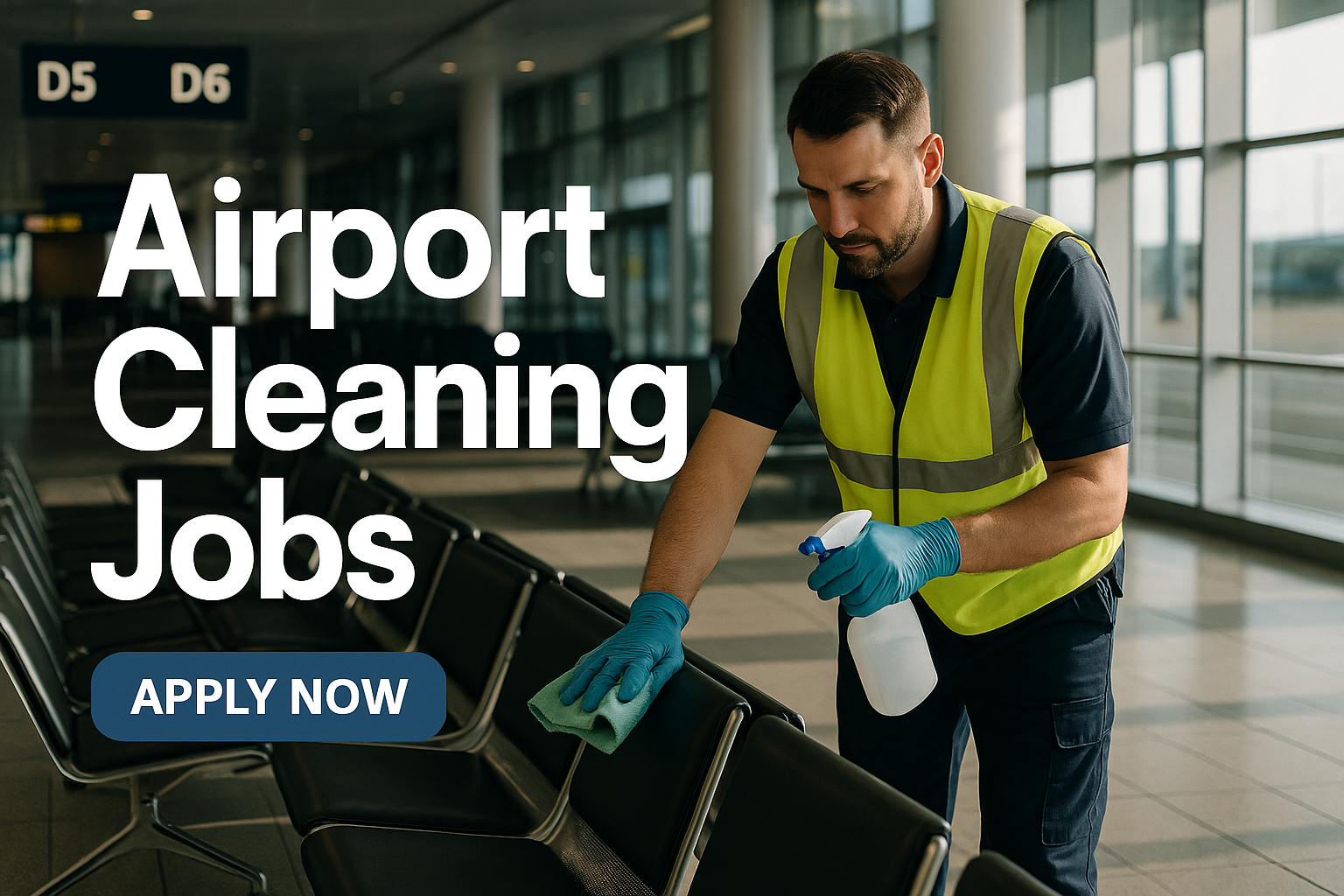
Airports are one of the most complex and busy environments in the world — they require constant cleaning and maintenance to keep passengers safe, comfortable and healthy. Airport cleaning jobs include terminal cleaning, gate and lounge cleaning, washroom sanitation, aircraft cabin cleaning (turnaround cleaning), tarmac sweeping (non-technical), cargo area cleaning, and specialized disinfection tasks. These roles are essential, stable, and often offer shift-based work with benefits for reliable staff.
Why Airports Hire Dedicated Cleaning Teams
The airport environment is high-traffic, high-exposure and time-sensitive. Reasons airports maintain dedicated cleaning teams include:
- High passenger volume: Terminals, security zones, lounges and gates are used by thousands daily and need frequent cleaning.
- Hygiene & health standards: Washrooms, seating areas, security trays and food courts require strict sanitation.
- Quick turnaround: Aircraft need fast cabin cleaning between flights to avoid delays.
- Regulatory compliance: Airports follow aviation authority rules and public health guidelines.
- Passenger experience: Clean terminals are central to a positive travel experience and brand reputation.
Types of Airport Cleaning Jobs
Airport cleaning roles vary by area and level. Common roles include:
- Terminal Cleaner / Janitor: General cleaning of terminals, seating areas, check-in zones and concourses.
- Washroom Attendant / Sanitization Staff: Frequent cleaning and restocking of washroom supplies; immediate response to spills or bio-hazards.
- Gate & Lounge Cleaner: Cleaning near boarding gates, priority lounges, and VIP areas — often requires a higher standard of finish.
- Cabin Cleaner / Aircraft Turnaround Cleaner: Cleaning aircraft cabins between flights — removing trash, cleaning tray tables, sanitizing surfaces, restocking amenities (requires airline/airport access & sometimes special training).
- Cargo Area Cleaner: Cleaning cargo halls, walkways, and service corridors.
- Apron & Tarmac Cleaning Support: Non-operational cleaning tasks in service areas (note: tarmac access usually restricted and requires safety induction).
- Deep Cleaning & Disinfection Teams: Periodic deep cleaning, fogging and disinfecting after events or health alerts.
Daily Duties & Task Checklist
Typical daily responsibilities for airport cleaning teams can include:
- Sweeping and mopping floors in terminals and corridors
- Wiping and sanitizing passenger seating, armrests and high-touch surfaces
- Emptying trash bins and replacing liners (including recycling separation)
- Cleaning and disinfecting washrooms multiple times per shift
- Responding to spillages and bio-waste quickly and safely
- Refilling paper products, soap dispensers and hand-sanitizer units
- Cleaning boarding gates, counters and staff welfare areas
- Aircraft cabin cleaning: trash collection, surface wipe-downs, vacuuming (for turnaround crews)
- Reporting maintenance issues like broken seats, leaks or blocked drains
- Following safety and access procedures (badges, restricted areas)
Shift Patterns & Work Hours
Airports operate 24/7, so cleaning roles are mostly shift-based. Typical schedules include:
- Early morning shifts (pre-first flights)
- Daytime shifts (peak passenger periods)
- Evening/night shifts (late arrivals, overnight deep cleaning)
- Split shifts for peak boarding times
- On-call or standby staff for emergencies and unscheduled cleaning
Many employers pay shift premiums for night or weekend work and overtime during peak travel seasons (festivals, holidays, major events).
Eligibility & Basic Requirements
Airport cleaning roles are accessible entry-level positions, but they come with specific requirements:
- Minimum age (usually 18+)
- Basic literacy and ability to follow written instructions
- Good physical health (standing, walking, bending)
- Willingness to work flexible hours and shifts
- Background check / security clearance for airside access
- Vaccination or medical clearance (depending on airport and country)
- For some roles (aircraft cleaning), an Airport ID/badge and safety induction is mandatory
Training & Onboarding
Most airports and contracted cleaning companies provide paid on-job training. Typical training components:
- Intro to airport layout, restricted zones and badge rules
- Use of cleaning chemicals safely (MSDS awareness)
- PPE training (gloves, masks, hi-vis vests, protective footwear)
- Manual handling and safe lifting techniques
- Biohazard and spill response procedure
- Aircraft turnaround safety procedures (for cabin crews)
- Customer-facing conduct when working in public areas
Health, Safety & PPE
Airports enforce strict safety standards. Expect employers to supply PPE and instructions:
- Disposable gloves, heavy-duty gloves, masks and eye protection
- Hi-visibility vests and comfortable safety shoes
- Chemical-resistant aprons for disinfecting tasks
- Safe handling protocols for sharps and bio-waste
- First-aid basics and emergency contact procedures
Never handle suspicious items yourself — report immediately to supervisors or security.
Salary & Benefits (General Guidance)
Salaries vary by country, airport size, and whether you work directly for the airport authority or a contracted cleaning company. Benefits often include:
- Competitive hourly wages or fixed monthly pay with overtime
- Shift premiums for night/weekend work
- Paid leave, medical insurance (depending on employer)
- Free or subsidized staff transport for night shifts (in some locations)
- Opportunity for permanent contracts and steady rosters
Many airports also offer internal upskilling: supervisors, specialist disinfection teams and facility maintenance roles.
How Recruitment Works — Where to Apply
Most hiring is done by airport authorities or third-party facility management companies. Common application channels:
- Airport careers portal or authority job board
- Facility management companies (contracted cleaners) websites
- Local staffing agencies or job portals
- Walk-in recruitment drives — especially before busy travel seasons
- Employee referrals and community hiring centres
Typical selection process:
- Submit basic application or CV
- Shortlist based on availability & entry criteria
- Face-to-face interview and practical test (cleaning demo)
- Background/security clearance and medical checks
- Badge issuance and induction training
- Start on probation with supervised shifts
Tips to Improve Your Hiring Chances
- Be flexible with shift availability — night & weekend willingness helps
- Show good attendance history in prior roles (if any)
- Demonstrate safety awareness and quick learning in trial tasks
- Keep ID, medical & contact documents ready to speed up onboarding
- Ask about transport for night shifts and PPE provisions at interview
Career Path & Growth
Airport cleaning work can lead to stable careers in airport operations and facility management:
- Cleaner / Janitor → Team Lead → Supervisor
- Specialist roles: Disinfection Team, Cabin Cleaning Specialist
- Transition to other airport roles after training (baggage handling, gate support)
- Long-term: Facility Manager or Health & Safety Officer (with certifications)
Real-World Example — Typical Day for a Terminal Cleaner
05:00–06:00 — Report, safety briefing, collect PPE and supplies.
06:00–09:00 — Clean check-in hall, clear trash, mop high-traffic floors.
09:00–14:00 — Clean gates between flights, sanitize kiosk touchscreens, restock washrooms.
14:00–15:00 — Lunch break & handover.
15:00–20:00 — Evening passenger peak: spot-cleaning, emergency spill response, finalize shift report.
Final Thoughts
Airport cleaning jobs are essential, respected, and offer long-term stability if you are reliable and safety conscious. The sector provides an entry-point into the aviation environment with clear training, protective measures and potential for career advancement. If you value steady shifts and a straightforward role that directly improves traveler experience and public health, airport cleaning work can be a good fit.
If you want this content adjusted for a specific country (UAE, India, UK, Canada, Saudi, etc.) with sample salary ranges and local hiring links, tell me the country and I’ll update the blog immediately.