

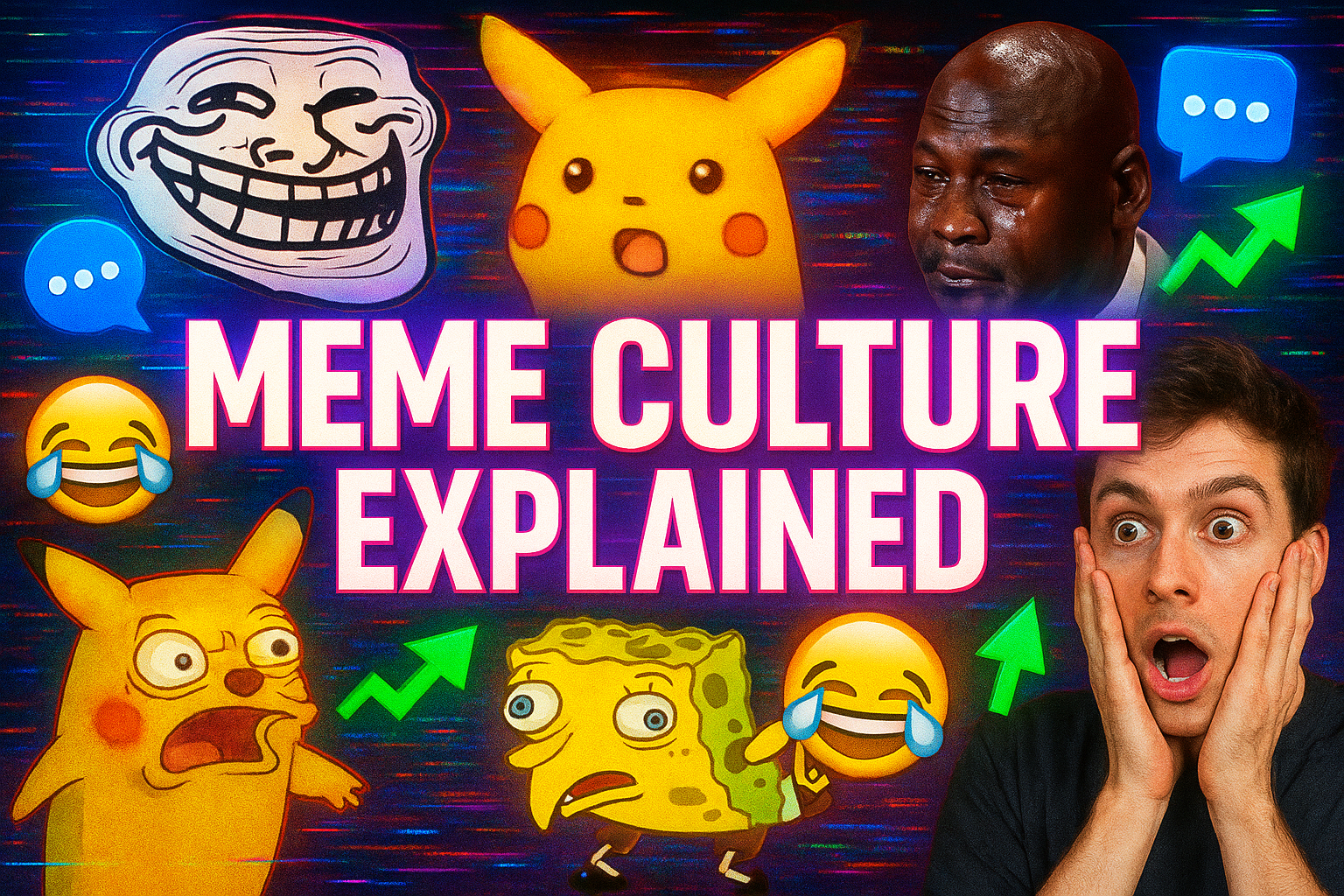
Meme culture has become one of the most powerful forces on the internet. What started as simple funny images or jokes shared between friends has now transformed into a global language understood by billions. Today, memes shape conversations, influence trends, express emotions, build communities, break news, mock politics, and even impact marketing campaigns. From Gen Z humor to modern pop-culture references, memes are the heart of digital entertainment.
In this blog, we explore the evolution of meme culture, the psychology behind viral humor, the rise of meme creators, how memes spread online, and why they have become an essential part of internet communication.
1. What Exactly Is a Meme?
A meme is any idea, joke, trend, or piece of media that spreads rapidly from person to person on the internet. Memes can be images, videos, GIFs, jokes, parodies, templates, or even simple phrases. The unique thing about memes is that they evolve quickly — by the time one format becomes popular, a new one already takes its place.
Popular Meme Formats Include:
- Image templates with text (Doge, Distracted Boyfriend, Drake Format)
- GIF reactions
- Short videos (TikTok, Reels, Shorts)
- Text memes and screenshots
- Relatable everyday humor
- Pop culture references
- Political satire and commentary
Each format reflects the humor style of its audience, and that’s what makes meme culture so universal.
2. The Evolution of Meme Culture: From Forums to Global Fame
Meme culture began long before social media exploded. Early memes spread through forums like Reddit, 4chan, and Tumblr. These communities created templates, characters, and formats that eventually went mainstream. With the arrival of Facebook, Instagram, and Twitter, meme sharing became easier and faster.
The biggest shift happened when short-video platforms like TikTok, YouTube Shorts, and Instagram Reels introduced a new era of meme-style content. Now, memes don’t just entertain—they create careers, boost music, and influence global marketing.
3. Why Do Memes Go Viral? The Psychology Behind It
Memes spread because they are:
- Relatable — People see themselves in the humor.
- Shareable — Easy to send to friends, groups, and social feeds.
- Quick to consume — Short, visual, and instantly funny.
- Emotion-triggering — Creates laughter, shock, nostalgia, or unity.
- Trend-based — Connects people with ongoing cultural moments.
Humor builds connection. When people share memes, they are sharing emotions — which is why meme culture spreads so fast.
4. Meme Creators: The New Age Influencers
In today’s digital era, meme creators have become real influencers. Pages like Daquan, Pubity, Memezar, and countless regional creators generate millions of views daily. Their posts go viral faster than traditional celebrity content.
Why Meme Creators Are Important:
- They understand internet humor.
- They can predict what will go viral.
- Brands pay them for meme marketing.
- They create trends that shape online culture.
Memers are now full-time digital creators, content strategists, and trendsetters.
5. Internet Platforms That Drive Meme Culture
Different platforms have their own meme styles. For example:
- Instagram: Relatable humor, reels, lifestyle memes.
- Twitter: Political memes, commentary, reaction memes.
- Reddit: Niche humor, discussion-based memes.
- TikTok: Short videos, viral sound-based memes.
- YouTube: Meme edits, commentary channels, shorts.
Together, these platforms create a giant ecosystem that keeps memes flowing nonstop.
6. How Memes Impact Pop Culture & Society
Memes are more than jokes. They influence:
- Music: Many songs go viral because of memes (e.g., “Mi Pan Su Su Su”, “Astronomia”).
- Movies & Series: Scenes become meme templates.
- Brands: Companies use memes for marketing.
- Politics: Memes influence public opinion worldwide.
- News: Complex topics become easier to understand through humor.
Memes have changed the way the world communicates — humor has become a universal language.
7. The Art of Creating a Good Meme
A successful meme usually has:
- Clear tone — funny, sarcastic, chaotic, or relatable.
- A strong visual — template that catches the eye.
- Timing — posting during trending moments.
- Context — referencing culture, news, or everyday struggles.
- Simplicity — easy to understand in seconds.
The most viral memes are those that capture a universal emotion — something that everyone has felt but never expressed.
8. How Brands Use Meme Marketing
Companies now use memes to communicate with younger audiences. Meme marketing is powerful because it feels natural, funny, and relatable. Brands like Netflix, Zomato, Swiggy, and Burger King have mastered meme-style campaigns.
Benefits of Meme Marketing:
- Huge organic reach
- High engagement
- Low cost compared to ads
- Shareability on multiple platforms
A single meme can bring massive traffic if executed correctly.
9. Controversies & Challenges in Meme Culture
While meme culture is fun, it also faces criticism. Issues include:
- Copyright concerns — Many templates are owned by photographers or studios.
- Misinterpretation — Some jokes can be taken the wrong way.
- Offensive humor — Dark memes, hate speech, or stereotypes.
- Misinformation — Memes used for propaganda.
Responsible meme creators understand boundaries and avoid harmful content.
10. The Future of Meme Culture
As technology evolves, so will memes. AI-generated memes, motion memes, AR/VR memes, and community-driven formats will take over the future. Memes will continue to shape communication, entertainment, entertainment, and digital identity.
Memes are no longer just jokes — they are reflections of society, humor, emotions, and cultural movements.
Final Thoughts
Meme culture is the heartbeat of the internet. It blends humor with storytelling, creativity with communication, and emotions with global unity. No matter your age, language, or culture — memes connect everyone. As long as humans love humor, meme culture will continue evolving and dominating the digital world.